



Melipona Bees the Black Stingless Bees of Mexico
Melipona bees are stingless pollinators native to the Yucatán Peninsula that the Maya have kept for over 3,000 years. They produce a rare, medicinal honey with antibacterial and anti-inflammatory properties, and they play a critical role in pollinating native plants across the region's tropical forests.
Most travelers come to the Riviera Maya for the beaches, the cenotes, and the food. But the jungle that stretches behind the coastline holds something most visitors never encounter: Melipona bees, a stingless species that has been part of Maya life for more than three millennia. These small, golden-brown bees don't sting, they build their hives inside hollow trees, and they produce one of the rarest honeys on earth. The ancient Maya used it as medicine, offered it in ceremony, and considered it a gift from the gods.
Understanding Melipona bees means understanding the Riviera Maya at a deeper level, the connection between the jungle, Maya heritage, and the living ecosystem that makes this part of Mexico unlike anywhere else. If you've ever taken an eco tour at Sandos Caracol or walked through the mangrove listening for howler monkeys, you've already been inside the world these bees depend on.
Why Melipona Bees Matter to the Yucatán Ecosystem
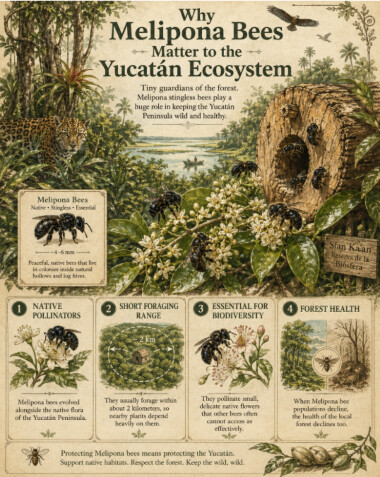
Before diving into history and honey, it's worth understanding the ecological role these bees play. Melipona bee pollination sustains dozens of native plant species across the Yucatán Peninsula, including tall forest trees and flowering plants found in protected areas like the Sian Ka'an Biosphere Reserve.
Unlike European honeybees, which were brought to the Americas by colonizers, Melipona bees evolved alongside the region's native flora. They have a foraging range of about two kilometers, much shorter than their European counterparts, which means the plants immediately surrounding their hives depend heavily on them. When Melipona populations decline, so does the health of the local forest.
These stingless bees are also uniquely suited to pollinate flowers that European honeybees can't access as effectively, particularly small, delicate blossoms. That makes them irreplaceable in maintaining the biodiversity of the Yucatán's tropical forests, the same forests that are home to jaguars, ocelots, and other wildlife native to the Yucatán.
How Melipona Bees Differ from European Honeybees
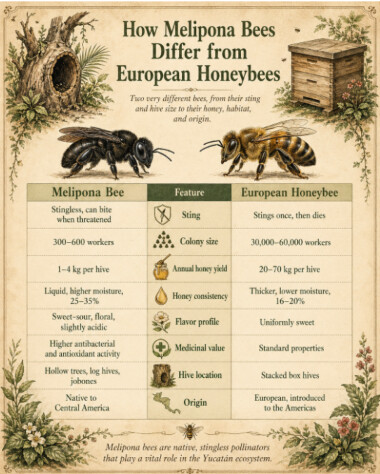
One of the first questions travelers ask is what makes these bees so different from the honeybees they know back home. The differences go well beyond the sting.
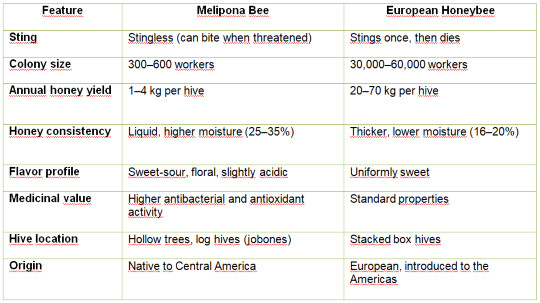
A queen Melipona bee is also unusual. In this species, all females, even those designated as workers, have the ability to develop as queens. The colony is smaller, quieter, and more self-contained than what most people picture when they think of a beehive.
3,000 Years of Maya Beekeeping
The Maya didn't simply harvest honey from wild hives. They developed meliponiculture, a structured practice of keeping and managing stingless bee colonies, which is one of the oldest forms of beekeeping in the world.
In the Yucatec Maya language, Melipona beecheii is called Xunan Ka'ab, which means "Royal Lady Bee." The name reflects the reverence the Maya held for these insects. Ancient texts, including the Madrid Codex, document the rituals, seasonal cycles, and spiritual significance attached to Melipona bees. Beekeepers were believed to hold a closer connection to the divine, and the bee god Ah Muzen Cab occupied an important place in the Maya pantheon.
Before sugarcane arrived in Mexico roughly 500 years ago, Melipona honey was the primary sweetener in the Mayan diet. It was also central to ceremonies and was used by priests and healers in ways that blended medicine with spiritual practice. The Riviera Maya is filled with archaeological sites that reveal the depth of Maya civilization, but traditions like meliponiculture show how much of Maya knowledge was rooted in the natural world rather than carved in stone.
Today, some Maya families in the Yucatán still tend Melipona hives using methods passed down through generations. They orient hive entrances to face east, a practice believed to improve honey production, and they continue to make offerings for the health and well-being of their colonies.
What Makes Melipona Honey So Valuable
The price of authentic Melipona honey can run several times higher than conventional honey, and it's not because of marketing. A single hive produces just 1 to 2 liters per year, compared to around 70 liters from a European honeybee hive. That alone makes it one of the scarcest natural food products in Mexico.
But scarcity is only part of the story. The honey benefits of stingless bee honey have been validated by modern research. Maya healers traditionally used it for eye infections and cataracts, respiratory ailments such as coughs and asthma, wound healing for burns and skin injuries, digestive problems including gastritis, and postpartum recovery.
Studies have confirmed that Melipona honey contains higher concentrations of antibacterial, anti-inflammatory, and antioxidant compounds than European honeybee honey. Its distinctive sweet-and-sour flavor, with floral and slightly acidic notes, has also attracted the attention of chefs and cosmetic companies looking for unique, natural ingredients.
What this looks like in practice: You're at a local market in the Riviera Maya and you see two jars of honey side by side. One is a large bottle of conventional honey for a few dollars. The other is a small glass jar of Melipona honey for five or six times the price. The difference isn't just flavor. It's 3,000 years of tradition, a critically endangered pollinator, and a product that a single colony spent an entire year creating.
The Decline of Melipona Bees and the Push to Save Them
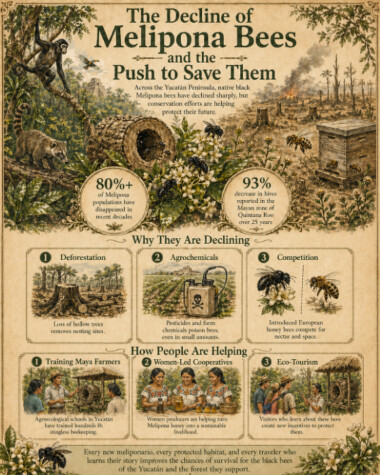
The numbers are stark. Across the Yucatán Peninsula, more than 80% of Melipona populations have disappeared in recent decades. In the Mayan zone of Quintana Roo, beekeepers have reported a 93% decrease in hives over the past 25 years.
The causes overlap and compound each other. Deforestation destroys the hollow trees where Melipona bees nest. Agrochemicals used in farming poison them, even in small amounts. The introduction of European honey bees in Mexico created direct competition for nectar and space, and the larger, more aggressive Apis mellifera almost always wins. Climate change and the spread of secondary vegetation have reduced the availability of the native flowers these bees depend on.
But conservation is gaining momentum. Agroecological schools in Yucatán have trained hundreds of Maya farmers in traditional and modern stingless beekeeping techniques. Women-led cooperatives have become some of the world's largest producers of Melipona honey, turning an ancestral practice into a sustainable livelihood. And eco-tourism, visitors paying to learn about and observe these bees, has created a new economic incentive to protect them.
The black bees of the Yucatán, as some local species are called, still face serious threats. But with every new meliponario that opens and every traveler who learns their story, the chances of survival improve. The same jungle that shelters Melipona bees also supports spider monkeys, coatis, and dozens of bird species, all part of an interconnected ecosystem that benefits when any one species is protected.
Seeing Melipona Bees During a Trip to the Riviera Maya
If you want to experience Melipona bees firsthand, the Riviera Maya is one of the best places in the world to do it. Several community-based tourism projects across Yucatán and Quintana Roo offer guided visits to meliponarios, stingless bee yards where you can observe hive structures, learn about Maya beekeeping history, and taste fresh honey directly from the comb.
These tours are safe for all ages since the bees can't sting, and they tend to be the kind of experience that families remember long after the trip is over.
Some travelers prefer to balance these off-property excursions with resort-based eco activities. At Sandos Caracol Eco Resort in Playa del Carmen, the surrounding jungle, cenotes, and mangroves offer a daily connection to the same ecosystem that Melipona bees call home. The resort's All-Nature Experience includes guided eco tours, jungle walks, and cenote exploration, activities that give guests a real sense of the region's natural heritage without needing to leave the property.
For couples or travelers who want a more beach-focused base, Sandos Playacar sits on one of the widest white sand beaches in Playa del Carmen and is located in the gated Playacar community, an area surrounded by lush jungle and dotted with its own small Mayan ruins. The resort is within biking distance of downtown Playa del Carmen and 5th Avenue, making it a convenient starting point for day trips to Melipona bee sanctuaries and other cultural experiences across the region. If you're traveling as a couple, our guide to romantic resorts in Playa del Carmen covers how to plan a trip that mixes beach time with meaningful excursions.
The tradeoff is worth thinking about. A morning at the pool is relaxing and easy, but a guided walk through the jungle where you learn about native pollinators and Maya traditions tends to be the experience kids bring up at school and adults talk about at dinner parties. Both have their place in a good vacation.
Simple Ways to Support Melipona Bee Conservation
You don't need to be a beekeeper to help protect Mexican Melipona bees. Here are a few practical steps, whether you're visiting the Riviera Maya or supporting from home.
Buy authentic Melipona honey from local cooperatives. Your purchase directly supports Maya beekeepers and gives them an economic reason to continue the practice.
Visit a community-run meliponario. Tourism revenue helps fund conservation and keeps traditional knowledge alive.
Choose eco-conscious accommodations that actively protect local ecosystems, reduce chemical use, and engage with surrounding communities.
If you live in the Yucatán, plant native pollinator-friendly species like flor de mayo, xtabentún, ramón, and achiote. Avoid agrochemicals in gardens and outdoor spaces.
Spread the word. Most people have never heard of stingless bees. Sharing what you learn, even casually, helps build the awareness these species need.
Planning a Trip That Connects You to the Region
The Riviera Maya offers a rare combination: a Caribbean beach vacation where the natural and cultural surroundings genuinely reward your curiosity. Whether you're tasting Melipona honey for the first time, swimming in a cenote that the Maya considered an entrance to the underworld, or watching spider monkeys swinging through the trees at Sandos Caracol, these experiences add a layer to your trip that a pool day alone can't match.
At Sandos Caracol, the eco activities, Maya-inspired programming, and preserved jungle environment make it easy to engage with the region without sacrificing comfort. And at Sandos Playacar, the beachfront setting and proximity to Playa del Carmen put you within easy reach of the cultural excursions and community tours where Melipona bees take center stage. Either way, it's the kind of trip where you come home knowing something new about the place you visited, and about the small, stingless bees that have quietly shaped it for thousands of years.
Plan your eco-friendly Riviera Maya vacation at Sandos Caracol | Explore Sandos Playacar in Playa del Carmen
Frequently Asked Questions
Why is Melipona honey so much more expensive than regular honey? A single Melipona hive produces only 1 to 2 liters of honey per year, compared to 20–70 liters from a European honeybee hive. The low yield, labor-intensive harvesting process, and the honey's documented medicinal properties all contribute to prices that are typically five to six times higher than conventional honey.
Can children safely visit a Melipona bee farm? Yes. Because Melipona bees are stingless and pose no allergy risk, community-run meliponarios are one of the most family-friendly wildlife experiences in the Riviera Maya. Many tours are designed with children in mind and include hands-on learning and honey tastings.
What time of year is best to visit a meliponario in the Riviera Maya? Melipona honey is typically harvested once or twice a year, often toward the end of the dry season (March through May). However, meliponarios welcome visitors year-round, and the bees are active in all seasons. Visiting during the flowering season gives you the best chance of seeing active foraging.
Do Melipona bees only live in Mexico? Melipona beecheii is native to Central America, ranging from the Yucatán Peninsula south through Guatemala, El Salvador, Nicaragua, and Costa Rica. The broader Melipona genus includes over 50 species found across tropical regions of the Americas. The Yucatán remains the center of Melipona beekeeping tradition.
Are there Melipona bees near Sandos resorts in Playa del Carmen? Both Sandos Caracol and Sandos Playacar are located in Playa del Carmen, within the same broader ecosystem that Melipona bees inhabit across the Riviera Maya. Sandos Caracol's jungle setting and eco programming, including guided nature walks and cenote tours, connect guests directly to the region's ecology. Sandos Playacar, set in the Playacar community surrounded by jungle and small Mayan ruins, offers a convenient base for day trips to nearby Melipona sanctuaries. For a dedicated bee experience, community-run tours in the region offer guided hive visits and honey tastings.